
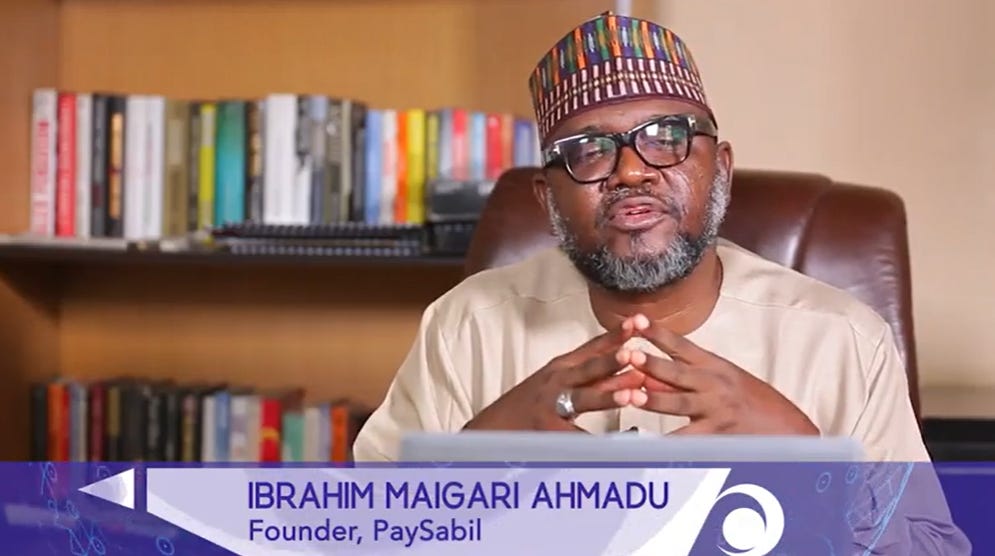
Abdullah Maigari Of Paysabil
Technology


Abdullah Maigari did not set out merely to build a product; he set out to solve a problem he had seen too many times to ignore. In communities where generosity flowed freely, there was often little structure guiding it.
Donations were given in cash, records were rarely kept, and trust—though abundant—was sometimes stretched thin by misuse or lack of accountability. It was a system built on faith, yet vulnerable to human gaps.
He watched this quietly at first.
In mosques, during community gatherings, and across charity drives, people gave what they could—sometimes their last notes folded carefully into donation boxes.
But Abdullah could not help but wonder: Where does it all go? Who ensures it reaches the right hands? And how can this trust be protected?
Those questions stayed with him long after the gatherings ended.
With a background rooted in building solutions and a mind tuned to systems thinking, Abdullah began to imagine something different—something that didn’t replace generosity but strengthened it.
That vision eventually took shape as Paysabil, a platform designed not just as a tool, but as a bridge between intention and impact.
Paysabil was built on a simple idea: giving should be easy, transparent, and secure.
Through the platform, donors could contribute Sadaqah or Zakat without the usual uncertainty. No more guessing, no more blind trust. Each organization listed was carefully verified, backed by recognized financial institutions, and validated by both community leaders and an internal council. It wasn’t just technology—it was accountability woven into every transaction.
For Abdullah, the real breakthrough wasn’t in the app itself, but in what it represented.

A donor in one city could support a mosque in another without being physically present. A charity project could reach people far beyond its immediate environment. And most importantly, communities could begin to rebuild confidence in a system that had long relied on informal structures.
He paid attention to the details others might overlook. The simplicity of downloading the app. The ease of logging in. The quiet reassurance that every listed receiver had passed through layers of verification. These were not just features—they were deliberate choices, each aimed at reducing friction in giving.
Yet, the journey was never about technology alone.
Abdullah understood that faith-based giving carries deep emotional and spiritual significance. It is not transactional; it is personal. So, Paysabil had to respect that. It had to feel trustworthy, not just function efficiently. It had to serve both the donor and the receiver with equal integrity.